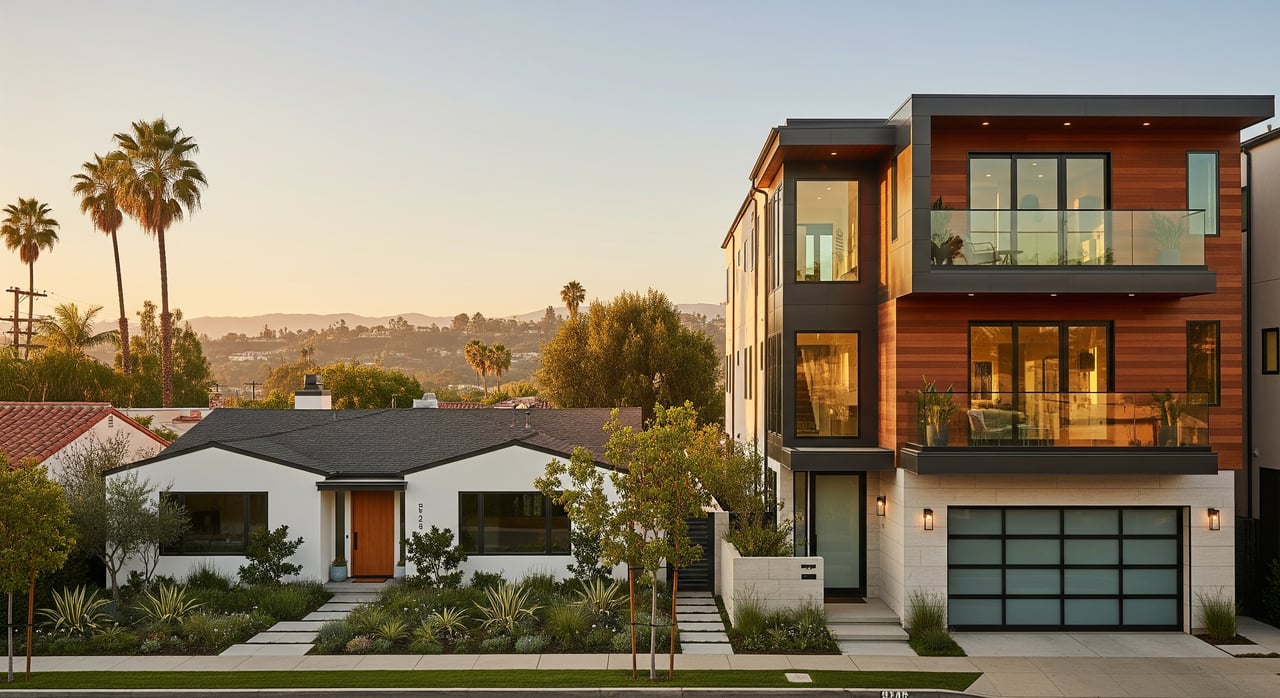
Wondering whether a Studio City townhome or a detached single-family home fits your lifestyle and budget better? You are not alone. Between commute convenience near the studios and the draw of private yards in the hills, the right answer depends on how you want to live, what you want to spend, and how much maintenance you want to take on. In this guide, you will compare costs, rules, financing, ADU potential, and resale factors so you can choose with confidence. Let’s dive in.
How Studio City shapes your choice
Studio City blends walkable, higher-density corridors near Ventura Boulevard and Universal with quieter residential pockets and hillside streets. If you value a short commute to major entertainment employers and easy access to restaurants and shops, a townhome near Ventura may be a strong fit. If you want more privacy, outdoor space, or room to add an accessory dwelling unit, a single-family home on a larger lot could be better.
Traffic and noise vary block by block. Homes and townhomes near the 101 Freeway, studios, or Ventura Boulevard often experience higher noise. Hillside properties add their own considerations like drainage, slope stability, and retaining walls. Keep these factors in mind as you compare options.
Ownership and rules that impact daily life
Single-family basics
When you buy a detached single-family home, you typically own the land and the structure. You control exterior changes, landscaping, and additions, subject to city zoning and permits. There is no homeowners association, which means no HOA rules or dues, but you are responsible for all exterior maintenance and insurance.
Townhome formats: condo vs PUD
Townhomes in Studio City can be set up as condominiums, planned unit developments, or attached fee simple homes with an HOA. In a condo, you generally own the interior of your unit while the HOA maintains the exterior and common areas. In a PUD, you usually own the lot and structure and share common areas through an HOA.
HOAs in California follow the Davis–Stirling Common Interest Development Act, which defines member rights and association duties. You will review CC&Rs, bylaws, budgets, reserve studies, insurance, and meeting minutes in escrow. To learn what HOAs must disclose and how rules are set, review the Davis–Stirling sections of the California Civil Code on the California Legislature’s site.
- Reference: the Davis–Stirling Common Interest Development Act on the California Legislature site: California Civil Code governing HOAs
Cost and financing differences to expect
Upfront price and ongoing costs
Detached single-family homes often command a premium over townhomes on a per-home basis, although the gap varies by lot size, location, and condition. Townhomes can offer a lower entry price or a trade for location and amenities.
- Townhomes: You will pay monthly HOA dues that typically cover exterior maintenance, landscaping, amenities, and parts of the insurance. Dues can rise over time, and special assessments can occur if reserves are low.
- Single-family homes: You avoid HOA dues, yet you cover every exterior cost yourself, including roofs, painting, landscaping, and any pool or yard upkeep.
Financing differences
Condo and townhome loans sometimes have extra requirements. Lenders review the project’s owner-occupancy ratio, litigation, number of units, and HOA financial health. FHA and VA loans may require condo project approval, while PUDs are usually simpler for lenders to treat like single-family homes.
- Learn how condo approval works: HUD’s overview of FHA condo requirements
- Explore mortgage basics and condo financing considerations: CFPB homebuying resources
Appraisals can be straightforward in larger communities with many recent sales. Smaller or unique projects may have fewer comps, which can affect valuation and timelines.
Insurance and earthquake coverage
In a single-family purchase, you typically carry an HO-3 policy that covers the structure and liability. In a townhome or condo, you usually carry an HO-6 policy for your unit’s interior and personal property, while the HOA maintains a master policy. It is essential to understand where the HOA’s coverage ends and yours begins. Earthquake insurance is separate from standard policies and is commonly evaluated in Los Angeles.
Taxes and assessments
In California, a sale triggers reassessment at purchase price, and Proposition 13 caps annual increases. Some communities include extra taxes like Mello-Roos or special districts, so always review your escrow and title reports. For parcel-level details, the Los Angeles County Assessor provides property tax information.
Lifestyle and resale tradeoffs
If you prioritize location and low maintenance
Townhomes often sit closer to Ventura Boulevard and studio hubs, which can shorten commutes and add walkable access to retail and dining. You benefit from lower exterior maintenance, and you may enjoy amenities like a pool or gym. HOAs can also provide security features such as controlled access.
The tradeoff is less private outdoor space, shared walls that may transmit sound, and rules covering renovations, pets, and rentals. If you want to customize your exterior or expand your footprint, a townhome may feel limiting.
If you want space, privacy, and flexibility
Single-family homes provide private yards, more storage, and greater flexibility to modify the exterior. You can usually add landscaping, decks, or accessory structures within local rules and permits. Families often value the multibedroom layouts and yard space.
The tradeoff is full responsibility for maintenance and potentially higher ongoing costs. Hillside homes also add specific inspection items like drainage, grading, and retaining wall health.
Resale patterns in Studio City
Detached homes tend to attract broader buyer pools and can show strong appreciation, but there is no universal rule. In Studio City, well located townhomes often sell quickly when affordability and proximity to studios matter. For either type, location, condition, and pricing strategy drive results.
ADUs, rentals, and HOA rules
Accessory dwelling units can add flexibility and future value on single-family properties. California has streamlined ADU approvals in many zones, which makes detached homes appealing if rental income or multigenerational living is a priority. Review state resources on ADU rules and local application steps here: California HCD’s ADU guide and the City of Los Angeles Department of City Planning.
HOAs often restrict short-term rentals and may cap the percentage of units that can be rented. Pet rules vary by community. If you plan to rent your unit or have pets, verify CC&Rs and house rules before you write an offer. For practical insights about HOA reserves and governance, visit the Community Associations Institute.
What to check during due diligence
Townhome and condo buyer checklist
- Confirm legal structure. Determine whether it is a condo, PUD, or fee simple townhome since this affects financing and insurance.
- Review HOA documents. Read CC&Rs, bylaws, house rules, budgets, and reserve studies. Ask for the latest board meeting minutes, litigation disclosures, and the master insurance policy.
- Assess financial health. Look for adequate reserves, recent special assessments, and delinquency rates among owners.
- Verify lending eligibility. Confirm conventional, FHA, or VA eligibility and whether the project meets lender criteria.
- Inspect shared elements. Pay close attention to roofs, exterior walls, decks, parking structures, and signs of water intrusion along shared walls.
- Understand pet and rental rules. If you plan to rent or have pets, verify restrictions and any waitlists or caps in writing.
Single-family buyer checklist
- Evaluate site and structure. Check yard size, drainage, fencing, pool or spa condition, and hillside items like slope stability and retaining walls.
- Confirm ADU potential. Review zoning, setbacks, and lot coverage with the City of Los Angeles Department of City Planning. Consider utility access and neighbor proximity.
- Verify permits. Make sure past remodels and additions were properly permitted with the city.
- Analyze location variables. Consider proximity to Ventura Boulevard, traffic patterns, and potential noise corridors. Families often review LAUSD enrollment and boundary information.
Seller preparation checklist
- Gather disclosures. Prepare the Transfer Disclosure Statement, Natural Hazard Disclosure, and any local forms required. If you are in an HOA, order the association document package early.
- Anticipate questions. Be ready to discuss any special assessments, litigation, or major building projects.
- Set a pricing strategy. Compare recent micro-neighborhood sales for homes and townhomes, and highlight the right benefits. For townhomes, emphasize low maintenance and amenities. For single-family homes, note yard space, privacy, and ADU potential.
- Prepare for market. Strategic repairs and staging can lift your result. With the right plan, you can leverage Compass Concierge to prepare and present your property with no upfront cost for approved improvements.
Which fits you? Quick scenarios
- Choose a townhome if you want low maintenance, amenities, and walkable access near Ventura Boulevard and studio campuses, and you are comfortable following HOA rules.
- Choose a single-family home if you want privacy, a yard, flexibility to change your exterior, or future ADU potential, and you are ready to own full maintenance.
- If you are undecided, focus on your week. Where will you spend time, how much noise is acceptable, and how much yard work do you want to manage? Then weigh financing and HOA rules against that lifestyle picture.
A thoughtful choice starts with clarity on daily life, then layers in costs, rules, and resale. If you want a tailored comparison of Studio City micro-neighborhoods, HOA reviews, or ADU potential on specific lots, reach out to Kristi Bakken for a one-on-one consult.
FAQs
How does FHA condo approval affect a Studio City purchase?
- FHA loans for condos often require the project to be approved by HUD, which affects eligibility and timelines; review HUD’s FHA condo requirements.
What does the Davis–Stirling Act mean for HOA buyers?
- It governs how California HOAs operate and what they must disclose, so you should review CC&Rs, bylaws, budgets, reserves, and insurance per the California Civil Code.
Where can I check ADU rules for a single-family lot in Los Angeles?
- Start with state guidelines from California HCD’s ADU resources and confirm zoning and setbacks with the City of Los Angeles Department of City Planning.
How do HOA dues and reserves impact long-term costs?
- Dues fund routine maintenance and reserves cover big projects; low reserves can lead to special assessments, so review budgets and reserve studies and consult CAI guidance.
How are Los Angeles County property taxes calculated after I buy?
- A sale triggers reassessment at the purchase price and Proposition 13 caps annual increases; see parcel-level details via the Los Angeles County Assessor.
What school information should I review before buying in Studio City?
- Check enrollment, programs, and boundary details through LAUSD and verify addresses directly with the district before relying on third-party maps.